Chor Bazaar · Jew Town · Bidar
ANTIQUES
A Complete Guide, with the Indian Story
PART I — ANTIQUES: THE OBJECTS AND HOW TO READ THEM
Stage 1What Counts as an Antique
An antique is an object that has outlived the people who made it and the household that first used it, and is now kept for that reason. The age alone is not enough. A chipped enamel mug from 1920 is old. It becomes an antique when someone looks at it and sees evidence: of a factory, a trade, a way of cooking, a family's taste. Collecting antiques is the habit of reading that evidence, and paying for the privilege of keeping it.
This guide is for four readers at once. The beginner with an inherited almirah and no idea what it is. The practising collector who already haunts markets and wants to stop making expensive mistakes. The specialist who needs the detail on joints, marks and law. And the general reader who simply likes knowing why things look the way they do. The main text is written for the first and the last. The boxes marked For the Collector carry the numbers and the fine print.
The hundred-year convention
The number most people know is a hundred years. It did not come from connoisseurs. It came from customs officers, who needed a clean line between old objects that could cross borders with little or no duty and new goods that could not. The international customs tariff still classes antiques as goods "of an age exceeding one hundred years". Many dealers, auction houses and national laws use the same line, and India's own law on antiquities uses it too (see Stage 18).
The convention is a rolling one. An object made in 1926 becomes an antique, in this sense, during 2026. That is why the definition keeps quietly swallowing things that used to be thought of as merely old: Edwardian furniture, early electric fans, the first gramophones.
It is also only a convention. In practice the trade bends it. A dealer in fine eighteenth-century furniture may be sniffy about anything Victorian, while a general market stall will call a 1970s brass tray "antique" without blushing. The word on a label is a sales description, not a certificate.
Suggested source: own photographyAntique, vintage, collectable
Three words are used loosely enough to cause real misunderstandings at the point of sale.
Antique means at least a hundred years old, by the convention above. It also usually implies that the object was made by hand or by early industrial methods, and that it belongs to a recognisable period.
Vintage has no agreed legal meaning. In the trade it generally means old but not yet antique, often somewhere between twenty and a hundred years, and characteristic of its decade. A 1950s Godrej steel cupboard is vintage. So is a 1980s film poster.
Collectable means only that people collect it. It says nothing about age. Some collectables are old, many are recent, and a great many were manufactured specifically to be collected: limited-edition figurines, commemorative plates, "heirloom" sets sold by subscription. Objects made to be collected are rarely scarce, because everyone who bought one kept it.
Two further terms matter. A period piece was made during the time its style belongs to. A piece made in the style of a period was made later, whether honestly as a reproduction or dishonestly as a fake. The difference between the two is the subject of much of this guide.
Why people collect old things
European princes filled cabinets of curiosities in the sixteenth and seventeenth centuries, and eighteenth-century Englishmen came home from the Grand Tour of Italy with marbles and paintings. In the nineteenth century a trade grew up to sell the look of ancestry to a new middle class. In the twentieth, auction houses made old furniture and silver an international market, and television made it entertainment.
Fashions in that market swing hard. In Britain and America, ordinary Georgian and Victorian mahogany, the trade's "brown furniture", fell steeply in price from around the turn of this century. The objects did not change; the demand did (see Stage 13). The better reasons to collect survive a falling market. An antique is a primary source you can hold.
How to use this guide
Stages 2 to 7 take the families of material one at a time. Stages 8 to 11 are the detective work: construction, marks, fakes and condition. Stages 12 and 13 cover buying and valuation. Stages 14 to 16, on storage, preservation and care, are the ones this guide is most emphatic about, because most damage to antiques is done slowly, at home, by owners who meant well. Part II turns to India: its collectors, its law, its markets, its furniture, metalware, textiles and paintings, and collecting ethically.
Stage 2Wood and Furniture
Furniture is the backbone of the antiques trade, and wood is the material that most rewards patient looking. It moves, shrinks, wears and darkens in ways that are very hard to fake convincingly. It also records every tool that touched it.
Timber
Wood is not one material. Hardwoods come from broadleaved trees: oak, walnut, mahogany, teak, rosewood, sheesham, satinwood, ebony. Softwoods come from conifers: pine, deodar, fir. The names describe the botany, not the hardness, and some "softwoods" are harder than some hardwoods.
The primary timber is what shows. The secondary timber is what does not: drawer linings, backboards, the inside of a carcass. Makers used cheaper wood for these parts, and the choice is often local. A cabinet with a mahogany front and drawer linings of an Indian or Burmese timber was very probably made in the East, whatever its style says.
English collectors long used a rough sequence of periods named after dominant timbers: an age of oak until the later seventeenth century, then walnut, then mahogany from the 1730s or so, with satinwood fashionable late in the eighteenth. It is crude, overlapping and entirely English, but you will meet it in every older book.
How furniture is built
Solid furniture is made of boards joined together. Case furniture such as chests, cupboards and desks is a box, the carcass, with drawers or doors. Seat furniture and tables are frames held together by joints under constant strain.
Veneer is a thin sheet of decorative wood glued onto a stable, plainer groundwork. It is not a sign of cheapness. Veneering let makers use rare, figured timber economically and arrange its pattern. Early veneers were saw-cut by hand and relatively thick. Machine-cut veneers from the later nineteenth century onwards are much thinner, and a chip at an edge will show the difference.
Marquetry is a picture or pattern made of pieces of veneer. Inlay is a decorative material, such as brass, bone, ivory or a contrasting wood, set into a cut recess in solid wood. Carving is cut from the solid, or sometimes applied as a separate piece and glued on.
Suggested source: commissioned diagramFinishes
A finish protects wood and changes its colour. Old finishes include oils, waxes, and shellac, the resin secreted by the lac insect, much of it from India. French polish is shellac dissolved in spirit and built up in many thin layers with a pad, and it became the standard finish for good furniture in the nineteenth century. Modern pieces are more often lacquered or sprayed with synthetic varnishes.
The finish, and the grime and wax that build up on it over generations, form the patina: the soft depth of colour that old wood acquires. Patina is darker in recesses and carvings, where polishing cloths do not reach, and lighter and smoother where hands rest. It is one of the most valuable things about a piece and one of the easiest to destroy. Stripping and re-polishing a period piece can take a large share off its value in an afternoon.
Stage 3Metals
Metal antiques range from Georgian silver to village cooking pots, and the same basic questions apply to all of them. What is it made of? Was it cast, raised by hammering, spun or pressed? And what has time done to its surface? That last question matters more than beginners expect, because the surface is where most of the value, and most of the damage, lies.
The metals
Silver is soft in its pure state and is almost always alloyed with copper. Sterling silver is 92.5 per cent silver. Britannia silver, a higher British standard, is 95.8 per cent. Much silver made outside Britain and its hallmarking system was of lower or unmarked fineness, including a great deal of Indian silver.
Silver plate is a base metal coated with silver. Sheffield plate, made by fusing a sheet of silver onto copper and rolling the two together, was developed in the 1740s and dominated until the mid-nineteenth century. Electroplate, silver deposited by electric current, was patented by the Elkington firm of Birmingham in 1840 and soon replaced it. Electroplate on nickel silver, an alloy of copper, nickel and zinc containing no silver at all, is marked EPNS. Where Sheffield plate wears through, pinkish copper shows. Where electroplate on nickel silver wears, the base shows as a greyish white.
Copper is soft, reddish and easily worked. Brass is copper alloyed with zinc, yellow and bright when polished. Bronze is copper alloyed with tin, harder, and the classic metal for cast sculpture and temple icons. Bell metal, a bronze with a high tin content, rings clearly and is used for bells, gongs and some traditional vessels. Pewter is mostly tin; older pewter often contains lead, which makes it darker and heavier. Iron was wrought by the blacksmith or cast in moulds, and steel is iron with controlled carbon.
Suggested source: own photographyHow metal objects were made
Casting pours molten metal into a mould. In the lost-wax method a wax model is covered in clay and melted out, and the mould is broken to release each unique cast. Sand casting leaves a slightly granular surface and sometimes a seam. Raising hammers a sheet over a stake and leaves faint facets inside. Spinning presses a sheet against a form on a lathe and leaves fine concentric lines. Stamping with dies was the nineteenth century's mass-production method. Chasing and repoussé push metal from front and back to model a design; engraving cuts it away.
Patina and corrosion
All metals except gold react with their surroundings. Silver tarnishes black as it meets sulphur compounds in the air. Copper alloys develop a surface layer that ranges from warm brown to green. On an old bronze that layer, the patina, is stable, protective and valued. On a Chola bronze or a Renaissance medal it is part of the object's history, and removing it is vandalism.
Not every green is benign. Bronze disease is active corrosion caused by chlorides, often from burial or salt air, and appears as small spots of pale, powdery green that spread in damp conditions. It is progressive and needs a conservator, not a toothbrush. Rust on iron is similarly active: it swells, flakes and eats inward. Stage 15 explains how to stop both.
Spelter, a zinc alloy cast and finished to look like bronze, was widely used in the late nineteenth century for cheaper figures and clock garnitures. It is lighter, softer and greyish where scratched, and it does not repay the price of bronze.
Stage 4Ceramics and Porcelain
Ceramics are made of clay fired to become hard. They survive burial, fire and centuries of use, which is why archaeologists love them and why antique shops are full of them. They are also brittle, easily restored and widely faked, which is why collectors learn to read them closely.
The three bodies
Earthenware is fired at comparatively low temperatures, very roughly 1,000 to 1,150 degrees Celsius. It stays porous unless glazed, chips easily and feels relatively light and soft. Terracotta, most village pottery, delftware and much early European tin-glazed ware are earthenware.
Stoneware is fired hotter, very roughly 1,200 to 1,300 degrees, until the clay partly vitrifies, or turns glassy. It is dense, strong and watertight even without glaze. Salt-glazed jugs, pickling jars and much kitchenware are stoneware.
Porcelain is fired hotter still from a refined body containing kaolin, a white clay. It is white, hard, and translucent where thin. China made it for centuries before Europe learned how. The Meissen factory near Dresden produced the first European hard-paste porcelain in the early 1700s. English factories, meanwhile, made soft-paste porcelain, fired at lower temperatures from various recipes, and around 1800 English potters perfected bone china, which includes calcined animal bone and became the national standard.
Suggested source: own photography; or museum study collection with permissionGlaze and decoration
A glaze is a glassy coating fused to the surface in the kiln. Look for how it has settled: pooling in hollows, thinning at edges, and the way it meets the unglazed foot. Crazing is a network of fine cracks in the glaze caused by the body and glaze shrinking at different rates. It happens naturally with age, but it can also be induced, and it traps dirt that stains.
Decoration under the glaze, such as cobalt blue, was painted or printed before glazing and is protected by it. Decoration over the glaze, enamel colours and gilding, was fired on afterwards at a lower temperature, sits slightly proud of the surface, and wears. Transfer printing, in which an engraved design was printed onto paper and transferred to the pot, arrived in England in the mid-eighteenth century and allowed mass-produced patterns such as the blue-and-white willow pattern.
Hand painting shows brush strokes and slight variations. A transfer print shows the fine lines or dots of an engraving, and sometimes a join where two pieces of the printed paper met.
Damage and repair
A crack, a chip and a hairline are different defects, and a description should say which. A gently flicked rim of sound porcelain rings clearly and a cracked one sounds dull, though shape and thickness also affect the note.
Riveting, with metal staples fitted across a crack through drilled holes, was a common repair for valued pieces before modern adhesives, and a well-riveted bowl can be charming in its own right. Modern restoration fills losses with resin and paints over them, often very skilfully. Restored areas feel slightly warmer and softer than glaze, sound different when tapped with a fingernail, and often show clearly under an ultraviolet torch.
Stage 5Glass
Glass is melted sand, and a surprising amount of its history can be read with a torch, a fingertip and an ultraviolet lamp. It is also the material on which dishwashers, sunny windowsills and hopeful sellers do the most irreversible damage.
What glass is made of
Ordinary glass is silica, usually from sand, melted with a flux such as soda or potash that lowers its melting point, and a stabiliser such as lime. This soda-lime glass is the everyday glass of bottles, tumblers and windows. Lead glass, in which lead oxide replaces much of the lime, was developed commercially in England in the 1670s. It is heavier, more brilliant and softer to cut, which made the great age of English and Irish cut glass possible. It is often sold as crystal, a trade word rather than a scientific one.
How it was formed
Free-blown glass was shaped by the glassblower on the end of a blowpipe, and then held on a solid iron rod, the pontil, while the rim was finished. Breaking it off left a rough scar on the base, the pontil mark. On fine pieces it was ground smooth into a shallow polished dimple. Its presence suggests hand-blowing; its absence proves little.
Mould-blown glass was blown into a mould and shows its pattern on the inside as well as the outside. Pressed glass, forced into a mould by a plunger, was developed in the United States in the early nineteenth century and brought cut-glass looks within reach of ordinary households. Its pattern is sharp outside and smooth inside, and its "cut" edges feel rounded rather than crisp. Fully automatic bottle-making machines arrived in the early twentieth century, and their bottles show mould seams running right up over the lip.
Suggested source: own photographyDecoration
Cutting grinds facets with wheels, and genuine cut edges are sharp enough to feel. Wheel engraving cuts shallow designs that look frosted. Acid etching, common from the nineteenth century, gives a flat, even, frosted surface. Enamelling and gilding are fired on and wear at the high points. Cameo glass is layered in contrasting colours, with the top layer carved or etched away.
Condition
Chips on rims are sometimes ground away, leaving a glass slightly shorter than its pair or a rim with a faint bevel. Run a fingertip gently round it. Cloudy or "sick" glass has been etched by hard water or dishwasher detergent, and the damage is in the surface itself: it cannot be washed off. Crizzling is worse. Glass made with too much flux and too little stabiliser slowly draws moisture from the air, develops a network of fine internal cracks, and may feel damp or slippery. It is a form of chemical instability, and Stage 15 explains how it is kept.
Stage 6Textiles
Textiles are the most fragile of the major antique families and the least likely to survive. They were used, washed, cut down, reused and finally thrown away. Those that remain are precious, and they are unforgiving of light, damp, insects and careless storage.
Fibres and structure
Textile fibres are either plant-based, such as cotton, linen and jute, or animal-based, such as silk and wool, including fine goat hair like pashmina. The distinction matters for care: moth larvae and carpet beetles eat animal fibres, while plant fibres are more vulnerable to acids and mould.
Look at the structure with a magnifying glass. In plain weave the threads go simply over and under. Twill makes a diagonal rib. Satin floats threads over several others for a smooth, lustrous face. Brocade adds extra pattern threads, often of silk or metal. In ikat the yarns were tied and dyed before weaving, so the pattern has characteristically feathered edges. Printed cloth carries its design on one face; woven patterns show on both faces, reversed.
The selvedge, the tightly woven edge of the cloth, tells you the original width of the loom and whether a piece is complete or cut from something larger.
Dyes as evidence
Before the mid-nineteenth century every dye was natural: indigo for blue, madder and lac for reds, turmeric and other plants for yellows, iron and tannins for blacks. The first synthetic dye, mauveine, was discovered in England in 1856, and synthetic versions of other colours followed within a few years. Synthetic dyes were cheap and quickly spread worldwide, including through Indian bazaars.
A colour that could only have come from an early synthetic dye therefore dates a textile to after the 1850s. Many early synthetics faded unevenly or ran. Compare the face of a textile with protected areas such as seams, folds and the reverse. A strong difference in colour tells you about fading, and about which dye you are looking at.
Suggested source: own photographyHandwork and machine work
Hand-spun yarn is uneven, with thick and thin places called slubs. Hand stitching varies in length and tension. Domestic sewing machines spread from the mid-nineteenth century, and machine stitching is perfectly regular. Machine-made lace and embroidery can be very convincing from the front and are usually betrayed at the back, by looping threads or perfectly repeating errors.
Metal thread, known in India as zari, was traditionally made of silver or silver-gilt wire wound round a silk core. Imitations use copper or plastic. Genuine silver thread tarnishes towards grey or black. Copper imitations can develop green corrosion.
Condition
Silk shatters, splitting into strips along the weave. It happens worst in silk that was weighted with metallic salts in the late nineteenth century to make it heavier and more lustrous. Light fades colour and weakens every fibre. Folds left for years become permanent creases and then splits. Moth holes, stains, rust marks from pins, and old darns all affect value, though an old, skilful repair can be part of a textile's story.
Stage 7Paper, Prints and Pictures
Paper antiques include maps, prints, drawings, watercolours, documents, posters and books. They are light, portable and often affordable, and they fill every antique market. They are also the family where an innocent reproduction is most easily mistaken for an original.
The paper itself
Until the nineteenth century most European paper was made by hand from linen and cotton rags. Laid paper, made on a mould of closely spaced wires held by thicker ones, shows a pattern of fine lines and wider chain lines when held to the light. Wove paper, made on a woven wire mesh, has no such lines. It was introduced in England in the 1750s and became common later in the century. Watermarks, designs worked into the mould, can identify a mill and roughly date a sheet.
From the mid-nineteenth century paper was increasingly made from wood pulp. It was cheaper, but it contained lignin and acidic chemicals, and it yellows and becomes brittle. That is why a Victorian newspaper crumbles while a far older rag-paper document stays supple.
India had its own paper traditions long before, and colonial artists often used imported European papers, which helps date Company paintings (see Stage 23).
How prints were made
A print is an image made by transferring ink from a prepared surface, and different processes leave different fingerprints.
Lithography was invented in Bavaria in the 1790s. Photomechanical halftone reproduction became widespread from the late nineteenth century, and the regular dot screen under a loupe is the single most useful test in the whole field. An "antique engraving" made of dots is a reproduction.
Suggested source: commissioned photomicrographs of prints in own collectionOriginals, restrikes and breakers
A restrike is a later printing from an original plate or block, sometimes long after the artist's death. It is not a fake, but it is not what an early impression is either, and the plate is usually visibly worn.
Many old prints were once pages in books. Breaking illustrated books to sell their plates individually is a long-standing trade. Text or a page number on the back betrays the origin. Later hand-colouring added to an originally black-and-white print is common and should be disclosed.
Watercolours and drawings are unique. Look for pencil underdrawing, changes of mind, brush marks that pool and dry at their edges, and paper texture showing through the paint. A printed reproduction, however good, lies perfectly flat.
Condition
Foxing is scattered brown spotting caused by mould and by iron impurities reacting with moisture. Toning is overall yellowing, often worst in a sharp line where an acidic mount touched the paper. Trimmed margins, tears, old tape, and prints laid down, meaning pasted onto card, all reduce value. None of them should be tackled at home (see Stage 15).
Stage 8Dating by Construction: Tool Marks, Joints and Fixings
Style tells you when a design was fashionable. Construction tells you when an object was actually made. Styles are revived, copied and faked constantly. Construction is much harder to fake, because a faker has to reproduce not only the look of an old method but its consequences: how the wood shrank, how the joint loosened, where the dirt settled.
The working rule is simple. An object can be no older than its newest original part. A drawer held together with a machine-made screw that was clearly fitted when the drawer was built cannot predate that screw. The hard part is deciding what is original and what is a later repair.
Saw and plane marks
Before powered machinery, timber was sawn by hand, often by two men with a pit saw, one above the log and one below. Hand sawing leaves straight marks that vary in spacing and angle. The circular saw became common in the nineteenth century and leaves regular curved arcs. The band saw, a continuous blade running on wheels, leaves fine, even, straight lines.
A hand plane leaves shallow scalloped hollows, especially on backboards and drawer bottoms where the maker did not bother to smooth them fully. Powered planing machines leave closely spaced, perfectly regular ripples.
Suggested source: own photographyJoints
The mortise and tenon, a tongue fitted into a slot, is the basic frame joint. Old ones were often secured with wooden pegs driven through the joint. As the surrounding timber shrank over a century or more, the pegs, which shrink differently, often came to stand very slightly proud of the surface. You can feel them with a fingertip.
The dovetail joins the corners of drawers and boxes with interlocking wedge shapes. Hand-cut dovetails are usually few, with broad tails and narrow pins, slightly irregular, and often accompanied by the faint scribe line the maker scratched to mark their depth. The saw sometimes overran that line. Machine-cut dovetails, common from the later nineteenth century, are evenly spaced, identical, and often have pins and tails of equal width.
Suggested source: own photographyNails, screws and glue
A screw that has been in its hole for a century is usually dark with oxidation, and the wood around it is the same colour as the rest. A bright screw in a bright hole, or a hole that was clearly bored for a larger screw, means a later repair or an alteration.
Oxidation, wear and shrinkage
Freshly cut wood is pale, and unfinished surfaces darken evenly over decades. Hidden inside surfaces should have a consistent, dull, dry colour; a bright surface at a joint or hidden edge means new wood, or old wood newly cut.
Wear should make sense: stretchers worn where feet rested, runners worn by centuries of opening, a polished halo round handles. Faked wear tends to be even and in the wrong places. Shrinkage is the hardest thing to fake: boards slightly out of round, splits along the grain, panels that rattle in their grooves. Replaced hardware is common and should be disclosed; look inside a drawer front for filled holes from earlier handles.
A word of caution for Indian furniture in particular. Village and bazaar carpenters in India used hand tools, pegged joints and hand-forged nails well into the twentieth century, and some still do. Hand tool marks prove that a piece was made by hand. They do not, on their own, prove that it is old.
Stage 9Marks, Hallmarks and Signatures
A mark is the maker's or the state's signature on an object. It can tell you who made something, where, of what standard, and sometimes the exact year. It is also the easiest piece of evidence to fake, transplant or misread. The golden rule is that a mark must agree with the object. When mark and object disagree, believe the object.
British hallmarks
Silver made in Britain has been assayed, tested for its precious metal content, and stamped at official assay offices for centuries. The Goldsmiths' Company in London has marked silver since around 1300, and the word hallmark comes from Goldsmiths' Hall. A full set of traditional British marks tells a remarkable amount.
Other countries marked silver in different ways, or not at all. France, the Netherlands, Russia and others had their own systems. Much Indian silver was never hallmarked. Colonial silversmiths working in Calcutta, Madras and Bombay often struck their own marks designed to look like British hallmarks. These pseudo-hallmarks carry no official guarantee of standard, though they can help identify a maker.
Modern Indian hallmarks on gold jewellery, applied under the Bureau of Indian Standards scheme, are a recent system and tell you nothing about the age of an old piece.
Suggested source: own photography; or commissioned macro photographMarks on ceramics and glass
Pottery and porcelain factories used painted, printed or impressed marks, and many changed them over time, which helps with dating. A few general clues are widely used as rough guides for British and European wares. The country of origin began appearing on many exports after the United States required it in the early 1890s, so a plain "England" suggests that period or later. "Made in England" generally suggests the twentieth century. A diamond-shaped registration mark was used in Britain between 1842 and 1883, and registered design numbers, marked "Rd No", replaced it from 1884.
Famous marks are copied endlessly. The crossed swords of Meissen and the anchor of Chelsea appear on thousands of pieces those factories never made. Acid-etched signatures on French art glass are notoriously easy to add to unsigned pieces.
Suggested source: own photographyMakers' stamps and labels on furniture
A few furniture makers stamped their work, and many retailers pasted paper trade labels inside drawers or on backboards. In India, cabinet makers and retailers in Calcutta, Bombay and Madras sometimes did the same, and a surviving label adds greatly to interest and value. Labels are also easily moved from one piece to another, so check that the paper has aged in place: the wood beneath should be paler than the wood around it, and the dirt should run up to the label's edge rather than over it.
When the mark lies
Marks lie in four main ways.
- Forged marks are struck with fake punches. Look for weak detail, wrong fonts, or a mark crisper than the worn object around it.
- Transposed marks are genuine hallmarks cut from a small, cheap piece and let into a larger, more valuable one. A solder line around the marks gives it away, often seen best when breathing gently on the surface to fog it.
- Added marks turn an unsigned piece into a signed one: a painted mark on porcelain, a signature on a painting.
- Honest but misleading marks are genuine, but used by a later factory, a retailer rather than a maker, or a revival of an old name.
Stage 10Reproductions, Fakes and Marriages
Every successful style is copied, and every valuable antique has attracted imitators. Some copies were made honestly and later misdescribed. Some were made to deceive. Many genuine antiques have been altered, combined or "improved" until they are something their makers would not recognise. A collector does not need to be suspicious of everything, but should have a procedure that assumes nothing.
The vocabulary of doubt
A reproduction is a copy made and sold openly as a copy. Victorian workshops made thousands of Georgian reproductions, many now over a hundred years old themselves: genuinely antique, and genuinely not Georgian. A fake is made or altered to deceive; a forgery, strictly, copies a particular maker or document.
A marriage joins parts of different pieces into one, most often a top section on another piece's base. A divorce splits one piece into two. A made-up piece is assembled from old timber and parts. An improved piece is genuine but carries later decoration, such as carving cut into a plain surface. A conversion changes function, such as a washstand turned into a desk.
The line between reproduction and fake is usually drawn at the moment of sale. A craftsman making an honest copy has done nothing wrong. The seller who later describes it as period has.
Marriages
Two-part furniture is where marriages cluster: bureau bookcases, chests-on-chests, dressers with plate racks, cabinets on stands. The two halves were made to fit, and a replacement half is never quite right.
Suggested source: own photography; or commissioned diagramFaking age
Fakers add the evidence of time as well as the style. Surfaces are beaten with chains and keys to give dents, rubbed with sandpaper to give wear, and darkened with stains and chemicals. Brass and bronze are aged with acids, ammonia fumes and burial in damp soil. Paper is toned with tea or coffee. Dirt is packed into crevices.
These methods have typical tells. Artificial wear is too even and appears where no one would touch. Chemical colour sits on the surface and is often the same inside and out, where genuine oxidation is not. Soil in crevices is loose and dry, and genuine old grime is compacted and bound up with old wax.
Woodworm holes are a classic example. The furniture beetle's larvae tunnel through the wood for years, and the adult emerges through a small round exit hole. A genuine old infestation leaves holes randomly scattered, mostly in sapwood, and the tunnels beneath meander. A drilled hole runs straight in. And if a surface has been cut, such as the edge of a board reshaped from old timber, the meandering tunnels are sliced open to show as grooves. Real beetles do not emerge through the side of their own tunnel.
Suggested source: own photographyA procedure, not a feeling
The feeling that a piece is "right" is valuable, but it is where fakers aim. Look at the whole object first, then at the hidden surfaces, then at construction, then at marks, then at the story. Every strand of evidence should agree. When one disagrees, stop and find out why, before you pay rather than after.
Stage 11Condition, Restoration and Disclosure
Almost no antique survives unaltered. A chair that has been sat on for two centuries has probably been reglued, a lamp has been rewired, a tabletop has been repolished, a bowl has been mended. The question is not whether an object has been touched, but how, how well, how much, and whether anyone told you.
Four kinds of intervention
Cleaning removes dirt and grime. Done badly, it also removes patina, gilding, paint and surface.
Conservation aims to stabilise an object and slow its decay, doing as little as possible. Good conservation is documented and, as far as possible, reversible, so that a future conservator with better methods can undo it. Professional conservators work to published codes of ethics.
Restoration aims to return an object to an earlier appearance, filling losses, replacing parts and retouching. It can be skilful and appropriate, especially for things meant to be used. It can also erase evidence and mislead.
Alteration changes what an object is: shortening legs, converting a function, adding decoration. It is the intervention that most damages value.
What restoration does to value
Disclosure
A seller should describe known restoration clearly. Good dealers do so without being asked, and good auction houses provide written condition reports on request. Many auction terms of sale, however, state that descriptions are opinions and that lots are sold as seen. The burden then falls on the buyer.
That makes three habits essential. Ask directly, in writing, whether a piece has been restored, altered or has replaced parts. Look for yourself, with a torch and, for ceramics and paintings, an ultraviolet torch, under which many modern paints, fillers and varnishes show differently from original surfaces. And ask for the answer to be written on the invoice.
Suggested source: own photographyWhen you are the restorer
If you have something restored, choose someone who explains what they will do, uses reversible methods where possible, and gives you a written report with before-and-after photographs. Keep replaced parts, labelled, add the report to your records (see Stage 16), and pass it on when you sell.
One restoration is not optional. Old wiring in lamps, fans and radios is a fire and shock hazard. Have a competent electrician check or replace it before anything is plugged in, keeping original fittings where possible.
Stage 12Buying: Auctions, Dealers, Markets and Online
Antiques change hands in four main ways, and each has its own rhythm, costs and risks. The object may be the same. What you pay, what you are told, and what you can do if it proves wrong are very different.
Auctions
An auction house sells on behalf of consignors and publishes a catalogue with a description and an estimate for each lot. The estimate is a guide to the likely price, not a valuation. Most lots have a confidential reserve, the minimum the seller will accept. The hammer price is the winning bid.
On top of the hammer price the buyer pays a buyer's premium, a percentage charged by the house, often a fifth to a quarter or more at established salerooms. Taxes may apply to the premium, and sometimes to the whole price. Online bidding platforms often add a fee of their own. Then come packing, shipping and insurance, and storage charges if you collect late.
Viewing is essential. Go to the preview, handle the object, and use your torch. If you cannot attend, ask for a condition report and extra photographs of the back, underside, marks and any damage. Leave an absentee or commission bid if you cannot bid live, and set it at your real limit.
Read the conditions of sale. They say what the house guarantees, which is often little beyond title and, sometimes, a limited period for a claim that a lot is a deliberate forgery. Descriptions are frequently opinions. A catalogue that says "in the style of" or "nineteenth century or later" is choosing its words carefully.
Suggested source: own photography with the auction house's permissionDealers
A dealer buys stock, takes the risk of holding it, and sells at a margin. You pay more than at auction, and in return get knowledge, a considered description and someone to go back to; a dealer with a reputation and repeat customers has every reason to describe things accurately. Asking for "the best price" is normal. Trade associations such as BADA and LAPADA in Britain, and the international confederation CINOA, bind members to codes of practice, which gives you a route to complain.
Always get an invoice that describes the object, its age, its material, any restoration and its price. A detailed invoice is your warranty, your insurance record and the first page of the object's provenance.
Markets and fairs
Flea markets, bazaars, Sunday markets and antique fairs are where discoveries happen and where mistakes are cheapest to make, as long as the stakes stay low. Arrive early, carry cash in modest notes, and bring your torch, magnet and loupe. Bargain with good humour. You will usually have no recourse if a piece proves wrong, no description in writing and no history. Vetted fairs, where a committee examines stock before opening, are a halfway house between a market and a dealer's shop.
Markets also carry a risk of stolen goods. An unusually good object at an unusually low price from a seller who cannot say where it came from should make you walk away, especially with religious images, which are the most-stolen antiques in India (see Stage 24).
Online
Online marketplaces, auction aggregators and social media sellers have brought the whole world's stock to a phone. They have also made it easy to buy what you have never seen. The word "antique" in an online listing is often just a search keyword.
Stage 13Valuation: What Something Is Worth, and to Whom
"What is it worth?" is the first question most people ask about an antique, and the honest answer is always a second question: worth for what purpose? One object can have half a dozen correct values at the same moment.
The different values
What drives value
Seven things, roughly in this order.
- Authenticity. Everything else depends on it.
- Condition. Original, undamaged surfaces are worth most.
- Rarity. How many survive, not how old it is.
- Quality. Skill of making, design and materials.
- Provenance. A documented history adds confidence and value.
- Size and practicality. A huge wardrobe is hard to sell to people who live in flats.
- Fashion. What buyers want this decade, which nobody controls.
Researching a price
Asking prices are hopes. Realised prices, what things actually sold for, are evidence. Auction houses publish past results, and several paid databases aggregate results across salerooms. A good comparable is the same type of object, of similar size, quality, condition and provenance, sold recently in a similar market.
Be careful of outliers. One spectacular result may have been two determined bidders fighting over a lot on a single afternoon, and it will not necessarily repeat. Look for a pattern across several sales.
Getting a professional valuation
For insurance, inheritance or a significant sale, get a written valuation. Choose a valuer who charges a fee, flat or hourly, rather than a percentage of the value, which would reward a high figure. Be alert to conflicts of interest. A dealer who values an object may then offer to buy it. An auction house's free appraisal is, reasonably enough, part of an effort to win the consignment.
A good written valuation identifies the object with a description and photographs, states its purpose and the type of value given, notes condition, and is dated. Insurance valuations should be updated every few years, because a collection insured at yesterday's figures is under-insured today.
Storage and Preservation
Stage 14Storage: The Enemies, the Indian Climate and the Right Conditions
Most antiques that are lost are not stolen, burned or dropped. They decay slowly in ordinary homes, in cupboards against damp walls, on sunny sideboards, in trunks opened once a year. This stage and the two after it are the least glamorous part of this guide, and the most valuable. Read them as soon as you own something you could not replace.
The enemies, one by one
Light. Visible light and ultraviolet break the chemical bonds in dyes, pigments, paper, textiles, lacquer and finishes. The damage is cumulative and irreversible. Ultraviolet does the most harm and adds nothing to seeing, so filter it out wherever possible.
Relative humidity. Relative humidity, or RH, is the water vapour in the air as a percentage of the most the air could hold at that temperature. Wood, ivory, bone, paper, leather and textiles are hygroscopic: they swell as RH rises and shrink as it falls. High RH encourages mould, insects, corrosion and moving salts; low RH cracks wood and lifts veneer. Rapid change is worse than either, because an object's surface moves faster than its core.
Temperature. Heat speeds almost every reaction of decay; a common conservation rule of thumb is that rates roughly double for every ten degrees. Temperature swings also drive RH swings: warm a closed room and its RH falls, cool it and RH rises.
Pests. Termites and wood-boring beetles eat wood. Silverfish and cockroaches graze on paper, glue and starch. Moth and carpet beetle larvae eat wool, silk, fur and feathers. Rodents shred everything for nesting.
Mould. Spores are everywhere. They germinate when RH stays above roughly 65 to 70 per cent for days, staining and digesting organic materials, and mould is a health hazard, especially for anyone with asthma.
Pollution and salt air. Sulphur compounds in city air tarnish silver. Chlorides from coastal air settle on objects, draw in moisture and drive aggressive corrosion in copper alloys and iron. Soluble salts in porous ceramics and stone crystallise at the surface and flake it away.
Acids and off-gassing. Wood-pulp card and newspaper are acidic. Oak and some composite boards give off organic acids that corrode lead and copper alloys in closed cupboards. Fresh oil paint, rubber and wool felt give off sulphur compounds.
Dust and handling. Dust is abrasive, attracts moisture and feeds pests, and cleaning it off causes wear. Skin leaves oils, salts and acids, and most breakages happen while moving things.
Well-meant fixes. Polishes, tapes, glues, bleaches, household cleaners, kerosene and sprayed pesticides have destroyed more antiques than any faker. Stage 15 goes through them material by material.
The Indian climate
Indian conditions combine almost every enemy at full strength.
The monsoon holds RH in much of the country above 80 per cent for weeks, and in coastal cities humidity stays high for much of the year. Wood swells, drawers stick, iron rusts in days, paper cockles and foxes, and mould blooms in closed cupboards.
Salt air in Mumbai, Chennai, Kolkata, Kochi and every coastal town deposits chlorides on metal and inside porous objects. Brass and bronze kept near a sea-facing window corrode far faster than the same objects inland.
North Indian summers bring temperatures above 45 degrees in parts of Delhi, Rajasthan and the plains, very low RH before the monsoon breaks, and then an abrupt jump to damp. That seasonal swing is hard on veneered and inlaid furniture. Dust storms in the pre-monsoon months drive fine, abrasive dust into every gap.
Power cuts switch off air conditioners and dehumidifiers, and RH in a closed room can climb back within hours. A plan that depends on continuous electricity needs a buffer, such as sealed boxes with silica gel, that keeps working when the power does not.
Termites are the particular enemy of wooden furniture and anything stored against a wall or on the floor.
Suggested source: own photographyTarget conditions
The numbers below are honest ranges, not precise targets. Museum guidance has become more flexible in recent years, and many institutions now accept a band of roughly 40 to 60 per cent RH for mixed collections, provided it changes slowly. Stability matters more than the exact figure. An object that has lived for decades at a steady 65 per cent may suffer more from being dried rapidly to 45 than from staying where it is.
| Material | Relative humidity | Temperature | Light |
|---|---|---|---|
| Wood and furniture | About 45–60%, steady | About 16–25°C | Moderate; no direct sun |
| Metals | Below about 40% where possible | About 16–25°C | Not light-sensitive, but avoid heat |
| Metals with active corrosion | Below about 35–40% | About 16–25°C | Not light-sensitive |
| Ceramics and stable glass | About 40–60% | About 16–25°C | Not light-sensitive |
| Unstable, crizzling glass | Moderate and very steady; take advice | About 16–25°C | Not light-sensitive |
| Textiles | About 45–55% | Cool and steady | Low, about 50 lux on display |
| Paper, prints, watercolours | About 40–55% | Cool and steady | Low, about 50 lux on display |
| Mixed collection at home | About 40–60%, changing slowly | As steady as possible | Low, no direct sun |
Affordable answers
A cheap digital hygrometer measures temperature and RH, and is the most useful thing a collector in India can buy. They typically cost a few hundred rupees to around ₹1,000 (2026) and can be several per cent out. Check one with the salt test: put it in a sealed container with a saucer of common salt dampened into a thick slurry, and after about a day the reading should be close to 75 per cent.
Silica gel absorbs moisture. Use it generously inside sealed boxes and display cases, in breathable cotton bags or perforated containers so it never touches objects. Indicating gel changes colour as it saturates. Choose the orange types sold as cobalt-free, because the older blue type contains cobalt chloride, which is toxic. Recharge it by spreading it in a shallow tray in a low oven, roughly 100 to 120 degrees, until the colour returns, following the maker's instructions. Let it cool in a sealed jar before use. Silica gel that has not been recharged all monsoon is doing nothing.
Airtight boxes, such as good polypropylene storage boxes with gaskets, create small, stable environments that survive power cuts. For larger collections, a dehumidifier with a built-in humidistat in a closed room, or an electronic dry cabinet of the kind sold for cameras, holds conditions steady.
Where in the home matters as much as equipment. Choose an interior wall, not an outside wall that sweats in the monsoon. Choose a middle floor, not the top floor under a hot roof, and not a ground floor that floods. Keep collections away from bathrooms, kitchens, windows and air-conditioner outlets. Raise cupboards and boxes off the floor, and leave a gap of several centimetres behind furniture for air and for inspection.
Suggested source: own photographyStage 15Preservation, Material by Material
Each material family decays in its own way and needs its own kind of care. The common thread is restraint. In preservation, doing too little is usually recoverable. Doing too much usually is not.
Wood and furniture
Wood moves with humidity, and furniture fails where parts move differently: veneers lift, inlays pop, panels split, joints loosen. Keep it away from air-conditioner outlets, heaters, sunny windows and outside walls, in a steady environment rather than a perfect one.
Dust with a soft, dry cloth, lifting rather than dragging across raised veneer or carving. A thin coat of good paste wax once or twice a year, well buffed, is ample. Many conservators advise against silicone spray polishes, which build up a cloudy film, and furniture oils, which darken and turn sticky. Never strip, sand or repolish a period surface. Do not polish brass fittings in place, because polish residue lodges in the wood as a pale crust.
Lift furniture, never drag it, after taking out drawers, loose shelves and marble tops. Check for termites and beetle activity every season (see Stage 14). Conservators kill wood-boring insects by controlled freezing or low-oxygen treatment; home remedies with kerosene, sprays or the family freezer risk more harm than good.
Metals, and the no-polishing rule
Metals corrode through reactions with oxygen, moisture, sulphur and chlorides, and most of that is controlled by keeping them dry and clean of salts.
Silver tarnishes from sulphur compounds in the air and in rubber, wool, felt, eggs and some paints. Copper, brass and bronze develop protective patinas, but chlorides from salt air, sweat or burial can trigger bronze disease, the pale powdery green spots described in Stage 3, which spread in damp conditions. Iron rusts rapidly at high RH. Lead and pewter corrode in closed cupboards made of oak or composite board.
The rule is this: do not polish antique metal. Every metal polish, however gentle, removes a little metal along with the tarnish. Repeated polishing softens engraving, erases hallmarks, wears through plating, and on bronze and copper alloys destroys an old patina that cannot be put back. Traditional Indian methods for household brass, such as tamarind, lemon, ash or brick dust, are abrasive or acidic and do the same.
There are sensible exceptions. Silver kept in regular use, or silver that has always been kept bright, may be cleaned occasionally with a mild, non-abrasive product intended for antique silver, working lightly and rinsing well. Even then, prevention is better. Store silver wrapped in anti-tarnish cloth or in sealed polythene bags with a sachet of anti-tarnish material, and handle it in nitrile gloves.
Suggested source: own photography; or museum conservation department with permissionCeramics and glass
Fired clay and stable glass are chemically robust and physically fragile. Most damage to them is breakage, and most of the rest is caused by water.
Never put antique ceramics or glass in a dishwasher. The heat and detergent etch glaze and glass, strip overglaze enamel and gilding, and dissolve old adhesives. Do not soak them either. Water enters cracks and restorations, and in unglazed or archaeological pottery it mobilises salts that later crystallise and flake the surface. Dust with a soft brush. If a glazed, sound piece genuinely needs washing, use a plastic bowl, lukewarm water with a drop of mild detergent, one piece at a time, and dry it thoroughly.
Store plates vertically in padded racks or flat with a sheet of foam or tissue between each. Do not stack cups or bowls inside one another. Wire plate hangers with tight springs chip rims; if you hang plates, use padded hangers that do not grip too hard. On open shelves, a small dab of museum putty or museum wax under a base keeps objects from walking off during vibrations or earthquakes.
Crizzling glass is chemically unstable and reacts to both extremes of humidity. It should not be dried aggressively with silica gel nor left in damp conditions. Keep it in steady, moderate conditions, and ask a conservator for advice on the right level.
Textiles
Textiles are damaged by light, folding, insects, acids and handling, and they need all five controlled.
Keep them in the dark when not on display, and display them only for limited periods. Store them flat where space allows, in acid-free boxes, interleaved with acid-free tissue. Where they must be folded, pad each fold with a soft roll of tissue so it does not form a hard crease, and refold along different lines every so often. Long textiles such as saris and shawls can be rolled evenly around a wide tube covered with acid-free tissue or washed cotton, never tightly, and never around a bare cardboard tube.
Moth and carpet beetle larvae work in the dark, in undisturbed places. Inspect wool and silk every few months, and look for webbing, cases, larval skins and loose fibres. Infested textiles can be treated by controlled freezing, which a conservator can advise on. Do not use naphthalene balls, which are hazardous to health and can leave deposits on objects. Traditional deterrents such as dried neem leaves should never touch the textile directly, and they do not replace inspection.
Do not wash, dry-clean, iron or steam an antique textile. Surface dust can be removed through a fine nylon mesh with a vacuum cleaner on its lowest setting, but only on a textile that is sound. Anything fragile, flaking or shattering needs a textile conservator.
Suggested source: own photography; or commissioned demonstrationPaper, prints and pictures
Paper is attacked by acid, light and damp. Frame works on paper with acid-free mounts and backing, so that the paper touches only archival materials, and use UV-filtering glazing. The glazing should not touch the surface, which a mount prevents. Never hang works on paper in direct sunlight, on a damp outside wall, or above a heater.
Store unframed prints, maps and documents flat, in acid-free folders inside archival boxes or a plan chest, with the largest at the bottom. Remove paper clips, pins, rubber bands and staples carefully, because they rust, stain and cut. Never use adhesive tape to mend a tear, never laminate, and never trim margins. Laminating a document or print destroys much of its value, and it is very difficult for a conservator to reverse.
Foxing, staining and old tape are conservation problems. They can often be treated, but only by a paper conservator. Home bleaching removes stains by destroying the paper.
Stage 16Care in Practice: Handling, Display, Records and the Routine
Good conditions and the right materials protect a collection most of the time. The rest of the time it is being moved, shown, catalogued, insured, flooded or inherited. This stage covers those moments.
Handling
Plan before you lift. Clear the path, prepare a padded surface to put the object down on, and move one thing at a time. Most breakages happen in the last few centimetres, when an object is being put down in a hurry.
Gloves are not always the answer. Nitrile gloves are right for metals, because fingerprints etch polished silver and brass, and for any object with a delicate surface. Cotton gloves reduce grip and snag on rough edges, and they make glass, glazed ceramics and polished stone more likely to slip. For those, and for most paper, clean, dry, bare hands are usually safer. Wash your hands, take off rings and watches, and do not use hand cream beforehand.
Lift from the strongest part. Carry a chair by its seat rail, not its arms or back. Lift a table by its frame, not its top. Hold a vase with one hand beneath it and one at its body, never by the rim, the handle or the spout, which are often old repairs. Carry small objects in a padded box rather than in your hands across a room. Support textiles and large sheets of paper on a board, never by their edges.
Materials: use and avoid
| Material | Use or avoid | Why |
|---|---|---|
| Acid-free, lignin-free tissue and board | Use | Chemically stable; will not stain |
| Buffered tissue and board | Use for paper, cotton and linen | The alkaline buffer absorbs acids |
| Unbuffered tissue | Use for silk, wool and photographs | Alkali can harm protein fibres and some photographs |
| Polyester film | Use | Clear, stable and inert for sleeves and folders |
| Polyethylene foam and bags | Use | Inert padding and moisture barriers |
| Polypropylene boxes | Use | Stable, and good with gaskets for sealed storage |
| Washed, undyed cotton | Use | Dust covers and padding without dyes or finishes |
| Powder-coated steel shelving | Use | Does not off-gas like raw wood or composite board |
| PVC plastic | Avoid | Releases acidic compounds as it ages |
| Rubber bands, rubber-backed mats | Avoid | Perish, stick, and release sulphur that tarnishes silver |
| Sticky tape, glue, staples, paper clips | Avoid | Stain, rust, cut and are hard to remove |
| Newspaper and ordinary cardboard | Avoid | Acidic; they yellow and stain what they touch |
| Wool felt | Avoid next to silver | Releases sulphur compounds |
| Bare oak, MDF or plywood cupboards | Avoid for metals | Release organic acids in closed spaces |
| Bubble wrap against a surface | Avoid for long-term storage | Traps moisture and can imprint soft finishes |
| Naphthalene balls | Avoid | Hazardous and can deposit on objects |
| Silicone polish, household cleaners | Avoid | Build-up, residues and irreversible damage |
Display versus storage
Display is where collections are enjoyed, and where they are exposed. Storage is where they rest.
Light-sensitive objects such as textiles, watercolours, prints, photographs and lacquer should be rotated: shown for a few months, then rested in the dark for longer. For these, about 50 lux is a common museum guideline, which is dim but perfectly visible once the eye adjusts. Oil paintings and wood tolerate more, roughly 150 to 200 lux. Metals, ceramics and stable glass are not harmed by light, though spotlights can heat them.
Use LED lamps, which produce little ultraviolet and little heat, and keep them away from the objects. Use UV-filtering glass or acrylic for framed works. Close curtains or blinds in rooms with strong daylight. Never display antiques above a heater, next to an air-conditioner outlet, or on a wall that takes afternoon sun.
A closed glass cabinet is a good compromise for small objects: it keeps dust out, slows humidity changes, and can hold a hidden tray of silica gel. Hang heavy pictures from two hooks with wire or D-rings, and check the fixings every year, especially on walls that grow damp in the monsoon.
When to call a conservator
Stop and find a professional conservator when you see flaking paint or gilding, active corrosion, fresh insect dust, mould, a broken ceramic or glass object, a torn or shattering textile, foxing or tape on important paper, or anything soaked in a flood, and before any treatment of a valuable object. Do not mend it first. A clean break can usually be joined almost invisibly, while one filled with instant glue must be undone, and the undoing does more damage than the drop. Put the pieces in a labelled bag, and wait.
In India, INTACH, the Indian National Trust for Art and Cultural Heritage, has carried out conservation of objects, and the National Research Laboratory for Conservation of Cultural Property in Lucknow is a national body for conservation research and training. Ask any conservator about their experience with your kind of object, what they propose, whether it is reversible, and whether they will give a written report with photographs.
Documentation and provenance
Give every object an inventory number and write it on a tag, box or label, never directly on the object. For each, record the fields below, with good photographs of the whole object, its marks, its back and underside, and every area of damage, with a scale in shot.
Provenance is the recorded history of ownership. Keep invoices, letters, exhibition labels, old photographs showing an object in a family home, and anything written on the back. They are evidence. A simple spreadsheet is enough for the catalogue. Keep it under the 3-2-1 rule: three copies, on two different kinds of storage, with one kept away from home.
Disaster planning
Flood has struck Indian cities hard in living memory, including Mumbai in 2005, Chennai in 2015 and Kerala in 2018. Keep collections off the floor and, in flood-prone places, above ground level. If objects get wet, move them to a safe, airy space, drain them gently, and dry them slowly out of direct sun, then contact a conservator quickly; wet paper and textiles can grow mould within days.
Fire calls for working smoke alarms, an extinguisher, and wiring checked in rooms full of old objects. Theft calls for good locks, photographs and descriptions that police can circulate, and discretion about what you own and where you keep it.
Decide now what to save first, and mark those few objects discreetly so another family member knows. Keep a printed list and a copy of the catalogue off-site. Insurance for valuable antiques in India usually needs specific declaration, valuations and photographs; read the policy for exclusions and limits on single items, and ask the insurer what documentation a claim will need.
A seasonal routine
| When | What to do |
|---|---|
| Every week in the monsoon | Read the hygrometer; check silica gel colour; look into cupboards for mould |
| Every month | Dust display objects; look for insect dust, webbing and droppings; note RH readings |
| Before the monsoon | Recharge silica gel; check roofs, windows and drains; move objects off outside walls and floors; check for termites; open and refold stored textiles |
| After the monsoon | Inspect everything for mould, foxing, rust and corrosion; air empty cupboards on a dry day, never the objects in sun |
| North Indian summer | Draw curtains; cover stored objects against dust storms; watch for rapid drying of wooden furniture |
| Every year | Rotate displayed textiles and works on paper; update the catalogue and photographs; test the backup; review insurance values |
PART II — THE INDIAN STORY
Stage 17Old Things in India: Collectors, Museums and the Trade
India is an unusual place to collect antiques because so much of its past was never put away. Brass lamps are still lit, bell-metal vessels still cook rice, carved doors still hang in village houses, and the family almirah still holds the family's clothes. An Indian antique has often been in continuous use until the day it was sold, which gives it honest wear and, sometimes, honest repairs of every age.
That continuity is also why the trade is supplied the way it is. Much of what reaches the market comes from old houses being modernised or demolished: Chettiar mansions in Tamil Nadu, ancestral houses in Kerala, havelis in Gujarat and Rajasthan, bungalows in the hill stations, and the flats of old Bombay and Calcutta families. Doors, pillars, brackets, lamps, furniture and household vessels move from those houses through scrap dealers and middlemen to the markets described in Stage 19.
Collectors and museums
The idea of collecting old objects for study took institutional form in India early. The Indian Museum in Kolkata grew out of the collections of the Asiatic Society and dates its founding to 1814. Museums followed in the presidency and princely capitals over the next century, and the Prince of Wales Museum in Bombay, now the Chhatrapati Shivaji Maharaj Vastu Sangrahalaya, opened in 1922.
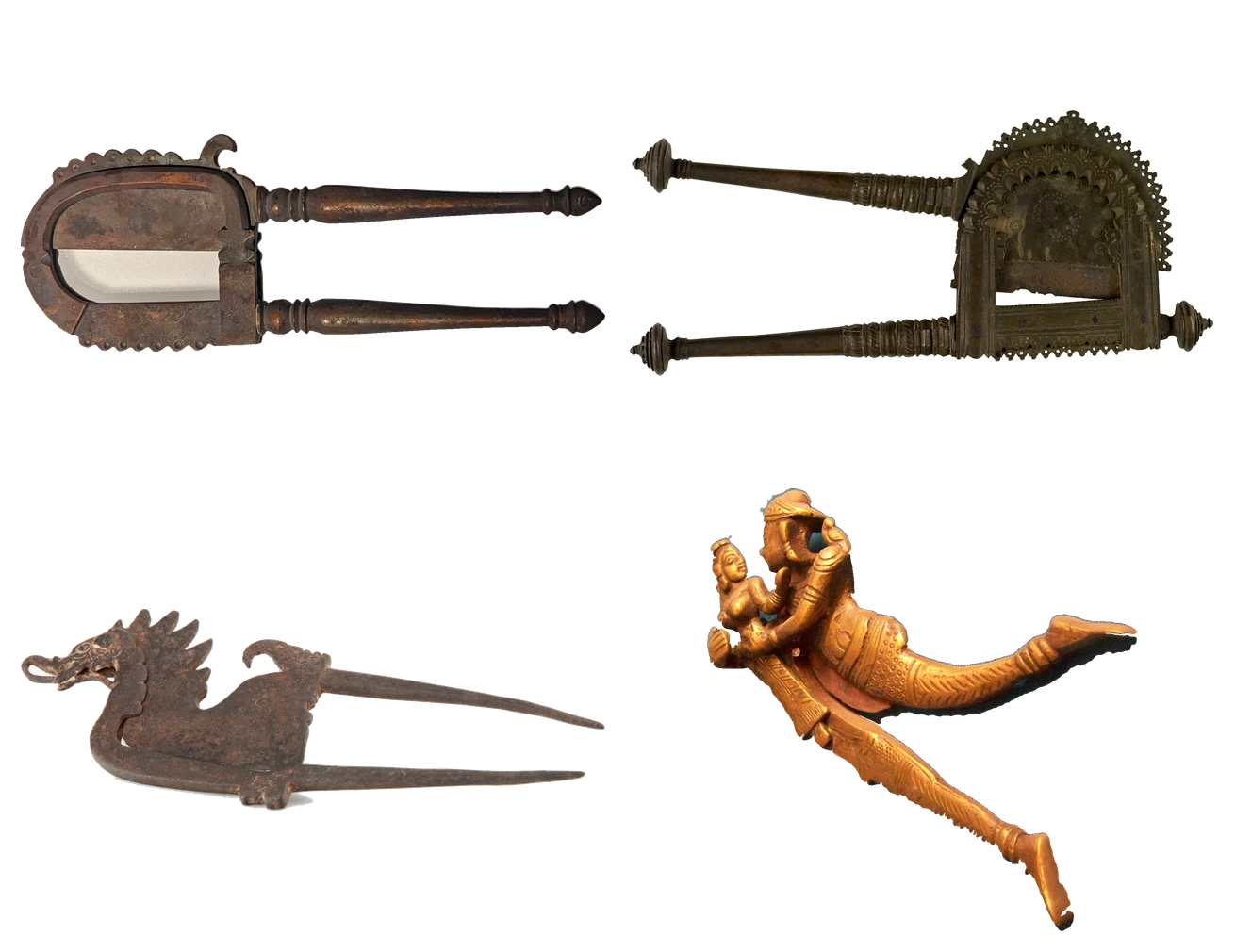
Private collectors shaped several of the best collections. The Calico Museum of Textiles in Ahmedabad grew from the vision of the Sarabhai family and is one of the great textile collections in the world. The Raja Dinkar Kelkar Museum in Pune is devoted largely to everyday objects, including lamps, locks, nutcrackers, vessels and musical instruments, gathered by one collector over a lifetime. It is an excellent place to learn what ordinary Indian antiques look like when they are genuine.
The trade after 1972
Before the 1970s a great many Indian antiquities, from temple sculpture to miniature paintings, left the country, some legally and much of it not. The Antiquities and Art Treasures Act of 1972 (see Stage 18) ended lawful private export and required licences for dealing. The market for genuinely old material turned inward, and a large reproduction industry grew up to supply the look of old India without the legal problem.
Today the scene is lively and mixed. Mumbai auction houses such as Pundole's, AstaGuru and Saffronart hold sales that include antiques and collectables alongside modern art. Established dealers work in the major cities, social media has created a new class of small sellers, and younger buyers want twentieth-century things too: film posters, Bakelite radios, enamel signs, steel almirahs.
Stage 18The Law: The Antiquities and Art Treasures Act, 1972
Every collector of old objects in India needs to understand one law, and to understand where their own understanding ends. This stage summarises the main points of the Antiquities and Art Treasures Act, 1972, as they affect a private owner. It is not legal advice. The Act has rules made under it, notifications that change what it covers in practice, and a procedure that has changed over time. Before you register, sell, move or export anything that may be an antiquity, check the current position with the Archaeological Survey of India, which administers the Act, and with a lawyer where the stakes are high.
What the Act covers
The Act defines an antiquity in two parts. The first covers objects that have been in existence for not less than one hundred years, including coins, sculptures, paintings, inscriptions and other works of art or craftsmanship; objects detached from buildings or caves; objects illustrating science, art, crafts, literature, religion, customs, morals or politics in past ages; objects of historical interest; and anything the Central Government declares to be an antiquity. The second covers manuscripts and other documents of scientific, historical, literary or aesthetic value that have been in existence for not less than seventy-five years.
That definition is wide. A hundred-year-old brass lamp, a carved bracket from a demolished house, a Company painting and a family's old account books can all fall within it.
The Act also covers art treasures. These are works of art that are not antiquities but that the Central Government has declared to be art treasures because of their artistic and aesthetic value. No such declaration can be made while the artist is alive. The works of a small group of major modern Indian artists, including Raja Ravi Varma, Rabindranath Tagore and Amrita Sher-Gil, have been declared art treasures. Whether a particular print, copy or minor work falls within a declaration is a question for the ASI.
Export
The single most important rule for a private owner is simple. It is not lawful for anyone other than the Central Government, or an authority or agency it authorises, to export an antiquity or an art treasure. A private person cannot lawfully take an antiquity out of India, send one abroad, sell one to a buyer overseas and ship it, or carry one in luggage when emigrating. The penalties include imprisonment, and objects can be confiscated.
Objects that look old but are not antiquities can be exported, but customs officers may need to be satisfied that they are not. The ASI examines objects and can certify that they are not antiquities. If you are sending or carrying abroad anything that could be mistaken for an antique, ask the ASI about the current procedure well before you travel or ship.
Dealing, registration and transfer
The Act requires anyone who carries on the business of selling antiquities to hold a licence, and licensed dealers must keep records. Buying from a licensed dealer, and keeping the invoice, is one of the best protections a collector has.
The Act also allows the Central Government to notify classes of antiquities that owners must register. A person who owns or possesses an antiquity of a notified class is required to register it with a registering officer, and receives a certificate of registration. The Act also sets out obligations when a registered antiquity changes hands. Which classes have been notified, whether your object falls within them, and how registration currently works are exactly the questions to put to the ASI. Do not rely on a dealer's reassurance or a website's summary.
Other laws you may meet
The Indian Treasure Trove Act, 1878 requires finders of buried treasure to report it to the Collector, so digging up old coins and objects carries legal obligations as well as archaeological harm.
The Wildlife (Protection) Act, 1972 restricts trade in and possession of products from protected animals. That matters for antiques containing ivory, tortoiseshell, rhino horn and some skins and wools. Owners may have declaration obligations, and dealing in such objects can be an offence whatever their age, so take advice first. Customs officers enforce the export restriction at the border.
Stage 19The Great Markets
India's antique markets are among the most absorbing in the world, and among the most instructive. They mix genuine old objects, honest reproductions, dishonest fakes and outright junk in the same shop, often on the same shelf. Nobody there will do your looking for you.
Chor Bazaar, Mumbai
Chor Bazaar sprawls through the lanes around Mutton Street, near Mohammed Ali Road in south Mumbai. The name means "thieves' market". It is often said to be a corruption of shor bazaar, the noisy market, though the story of stolen goods resurfacing there is older and more popular.
The stock changes by the lane: brass lamps and vessels, clocks, gramophones and radios, chandeliers and glass shades, old film posters and lobby cards, enamel signs, Bakelite, locks and keys, and a great deal of colonial-style furniture. Some of that furniture is genuinely old. Much of it is made, remade or aged in the workshops a few doors away, and watching them at work is the best free lesson in faking any collector will get. Shop hours and closing days vary, so check before making a special trip.
Suggested source: own photographyJew Town, Mattancherry, Kochi
In Mattancherry, the lane leading to the Paradesi Synagogue, built in 1568, is lined with antique and handicraft shops, and behind them stand large warehouses. They hold carved doors and pillars, wooden chests, bell-metal urulis big enough to bathe in, lamps, boat parts and furniture, much of it salvaged from old Kerala houses. The warehouses are also full of new work made to look old, sold honestly by some shops and ambiguously by others.
Remember Stage 18 in Kochi. A shopkeeper offering to arrange export of a genuinely old object is offering to break the law, and paperwork that describes an antique as "new handicraft" does not change what it is.
Other places worth knowing
Karaikudi and the Chettinad towns of Tamil Nadu have antique shops full of fittings from dismantled Chettiar mansions: pillars, doors, enamelware, glass, lamps, kitchen vessels and imported Victorian objects.
Delhi has long-established art and antique dealers, notably around the Sunder Nagar market.
Kolkata has a handful of long-established auction rooms on and around Russell Street, where the contents of old houses still pass under the hammer.
Jodhpur is the centre of an enormous furniture industry, much of it working in old and old-style designs for export. Its warehouses are a superb place to learn what new "old" furniture looks like in every stage of making.
Beyond these, every old city has its own lanes of brass dealers, furniture restorers and scrap merchants. Kabadiwalas, the dealers in household scrap, are where many objects enter the trade.
Stage 20Colonial and Anglo-Indian Furniture
From the sixteenth century onwards, Portuguese, Dutch, French and British traders and administrators in India wanted furniture of the kind they knew at home. Indian carpenters, carvers and inlayers made it for them, in Indian timbers, using Indian techniques, and adapting European forms to heat, humidity, insects and the constant moves of colonial life. The result is a large, varied and increasingly collected family of furniture, generally called Anglo-Indian or colonial.
The main types
Timbers are the first clue. Teak, Indian rosewood, sheesham, padauk, ebony, jackwood and satinwood from Ceylon all appear. A European-looking piece built entirely of Indian timbers, including its drawer linings, was very likely made in India.
Colonial usage left words in the language. Almirah, a cupboard, came into Indian English from the Portuguese word for one. Teapoy, a small table, comes from Hindi and Persian words for "three" and "foot".
Suggested source: museum open-access collection, or own photographyReading colonial furniture
Everything in Stage 8 applies, with Indian adjustments. Hand tools and pegged joints lasted well into the twentieth century, so they do not prove great age. Brass fittings were often made locally, and replaced repeatedly. Caning wears out and is routinely renewed, which is normal but should be disclosed. Termite damage is common in the feet and lower rails, and old repairs there are frequent.
The reproduction trade in this field is enormous. Planter's chairs, campaign chests, blackwood-style chairs and "colonial" almirahs are made new in quantity, often from reclaimed old timber, which gives a new piece the colour and wear of an old one. Look for fresh cuts across old surfaces, inconsistent oxidation inside, and joints that are too tight for a hundred years of monsoons.
Stage 21Metalware: Bidri, Brass and Bell Metal
India's metalworkers made lamps, vessels, boxes, locks, tools and sacred images in quantities that dwarf any other antique family, and much of it was made to be used every day. This is the family where a beginner can own a genuinely old and beautiful object for modest money, and the family where artificial ageing is most common.
Bidri
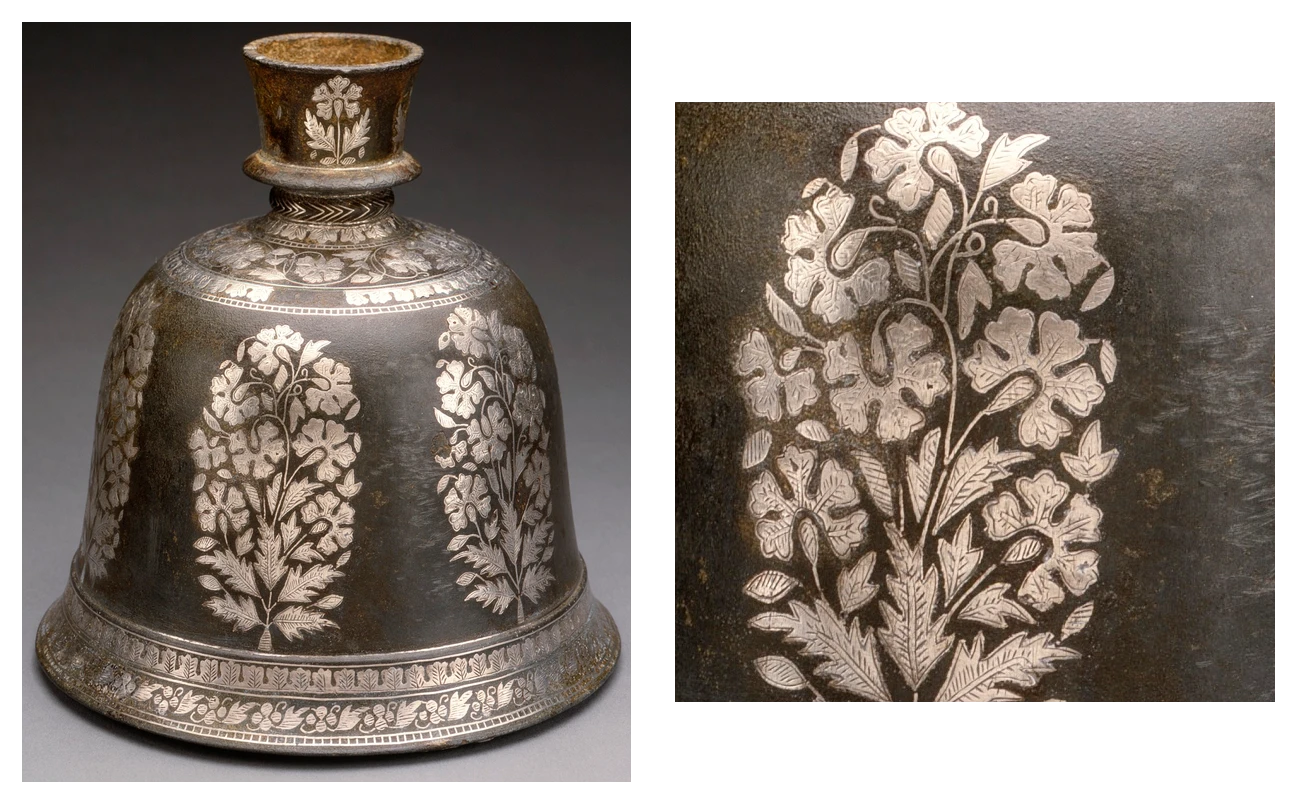
Bidri ware takes its name from Bidar in Karnataka, and its origins are usually traced to the Deccan sultanates. It is cast in an alloy that is mostly zinc, with a little copper. The surface is engraved and inlaid with silver, sometimes also brass, in patterns of flowers, vines and geometry. The piece is then coated with a paste containing a special earth, traditionally said to come from the old fort at Bidar, which turns the alloy a deep, even black while leaving the silver bright.
Hookah bases, paan boxes, spittoons, bowls, trays and small boxes are the classic forms, and centres at Hyderabad, Lucknow and Purnea also produced it. Good old pieces have thick, well-set inlay, crisp detail and a soft, even black. Modern pieces tend to have thinner inlay and a harsher surface.
Never polish bidri. The black surface is the decoration, not tarnish, and metal polish strips it to a patchy grey. The zinc alloy is also brittle and cracks if dropped. Keep it dry, dust it gently, and handle it with clean hands or nitrile gloves.
Brass, copper and bell metal
Lamps are the great Indian brass collectable: standing lamps such as the Kerala kuthuvilakku, hanging chain lamps, lamps held by female figures, and small oil lamps in endless forms. Vessels include lotas, water pots, cooking pots and the wide bell-metal urulis of Kerala. Betel-nut cutters, called sarota, turn a simple blade into birds, horses and lovers. Boxes held betel, spices, jewellery and cosmetics.
Bell metal, known as kansa or kanchu, is a high-tin bronze used for plates, bowls and vessels, particularly in eastern India and Kerala. Dhokra is lost-wax casting by craft communities in central and eastern India, and its figures and vessels have a distinctive threaded surface. The Aranmula kannadi of Kerala is a mirror of polished metal rather than glass. Thanjavur art plates set raised figures in brass, copper or silver onto a contrasting ground.
Sacred images
South Indian bronze icons are among the world's great metal sculptures, and genuinely old ones are antiquities under Indian law. Workshops at Swamimalai and elsewhere still cast superb icons by the lost-wax method, and some new work is artificially aged and sold as old. Genuinely old temple bronzes, meanwhile, are among the most-stolen objects in the country. A collector has no honest way to buy one casually. Stage 24 explains why.
Stage 22Indian Textiles
For centuries India clothed much of the world. Its painted and printed cottons, silks and fine wool shawls were traded from Southeast Asia to Europe, and several of its textile traditions remain living crafts today. That makes Indian textiles both wonderful to collect and difficult to date, because traditional techniques and patterns continue.
Traditions a collector will meet
Kashmir shawls carried the curling cone motif, the buta, to Europe, where weavers in the Scottish town of Paisley imitated the shawls so successfully in the nineteenth century that the pattern took the town's name. Patola were so prized in Southeast Asia that they were kept as heirlooms and ritual cloths there, and some fine old examples survive abroad rather than in India.
Suggested source: museum open-access collectionDating clues
Everything in Stage 6 applies. Synthetic dyes spread through Indian markets in the later nineteenth century, and their colours help date a piece. Mill-made cloth and machine-spun yarn, regular and even, replaced handloom cloth in many uses. Zari made of real silver or silver-gilt wire tarnishes grey or black; later imitations use copper or plastic.
Patterns continue, so the style of a textile is weak evidence of age. The quality of the materials, the evenness of the yarn and the dyes are stronger.
Care
Indian textiles face every enemy in Stage 14 at full strength. Silk and wool are eaten by moths; cotton and silk fade and split in light; zari tarnishes in polluted air; and folds left in a trunk through a few monsoons become permanent. Stage 15 sets out what to do. Old saris and shawls deserve the same care as any museum textile: rolled or loosely folded with padding, kept dark and dry, inspected every season, and never washed at home.
Stage 23Company Painting and Kalighat
Two kinds of painting from the colonial period have moved from the margins of Indian art history to its centre in recent decades. One was made for foreign patrons, the other for pilgrims in a Calcutta lane. Both record a changing India with a clarity that no written source matches.
Company painting
From the mid-eighteenth century, as the East India Company's power grew, Indian artists trained in Mughal and regional traditions began painting for Company officials and other Europeans. They adapted their methods to the patrons' taste, usually working in watercolour on European paper, with softer modelling and European-style perspective. The result is called Company painting.
Subjects were what the patrons wanted to record and send home: sets showing trades and occupations, castes and costumes, festivals and processions, monuments, boats, and above all natural history. In Calcutta in the late 1770s and early 1780s, artists including Shaikh Zain al-Din painted birds and animals for the collection of Sir Elijah and Lady Impey, and these are now counted among the finest Indian paintings of their century. Delhi artists painted Mughal monuments and portraits, often as small works on ivory. Painters at Tanjore, Trichinopoly, Murshidabad, Patna and Lucknow each developed their own style.
In Trichinopoly and elsewhere, artists also painted on thin sheets of mica. Mica paintings of trades, costumes and festivals were sold in sets to travellers. They are fragile, their paint flakes easily, and they must be stored flat and never under pressure.
A major exhibition at the Wallace Collection in London in 2019 brought the finest of these works to a wide audience, and prices for good examples have risen accordingly.
Suggested source: museum open-access collectionKalighat painting
In the nineteenth century, painters from Bengal's traditional scroll-painting communities, the patuas, set up near the Kalighat temple in Calcutta. For the stream of pilgrims they produced quick, cheap paintings in watercolour on mill-made paper. Their bold, sweeping outlines and simple shaded forms could be painted in minutes, and a painter often worked in a production line with family members.
Kalighat subjects began with gods and goddesses and scenes from the epics. They soon expanded into sharp satire of the new urban society: the dandyish Calcutta babu, the courtesan, the henpecked husband. Cats holding prawns or fish became a famous motif. Artists also painted current scandals, much as a newspaper cartoonist would.
By the early twentieth century cheap printed pictures had largely replaced Kalighat painting. It was rediscovered by artists and collectors, and it influenced Jamini Roy, among others. Some of the largest collections are held outside India, especially in London.
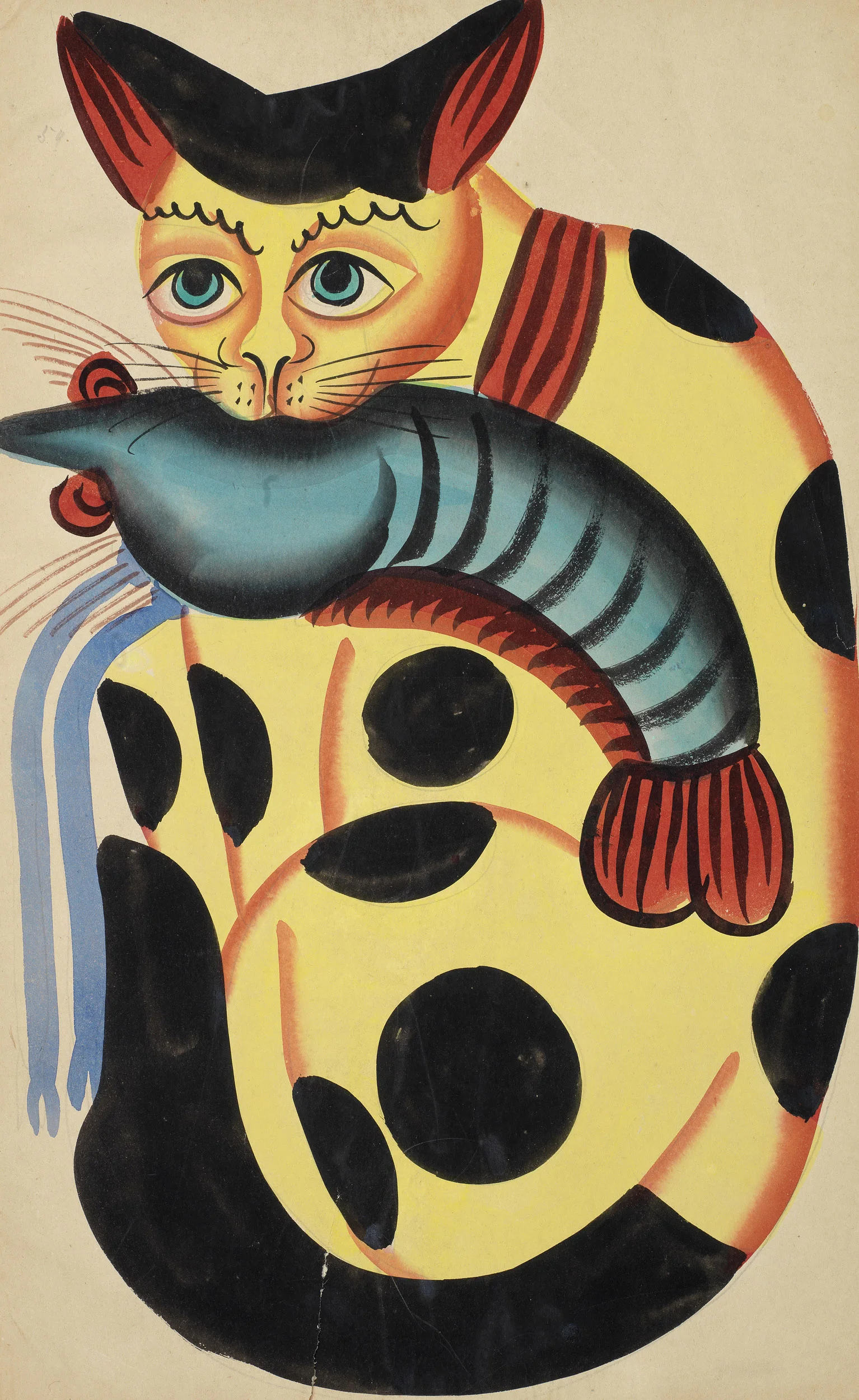
Patua families in West Bengal still paint in Kalighat and scroll traditions. Their work is a living art and worth buying for itself. It becomes a problem only when a seller describes a new painting, perhaps on tea-stained paper, as nineteenth-century.
Stage 24Collecting Ethically
In India the ethics of collecting are not abstract. Temples, shrines and archaeological sites have been robbed for decades to supply collectors at home and abroad. Every buyer of an unprovenanced sacred image, however innocent, adds to the demand that pays for the next theft.
What has happened
South Indian bronzes, stone sculptures and other sacred images have been stolen from temples and smuggled abroad in large numbers. The case of Subhash Kapoor, a New York dealer whose business sold Indian antiquities to major museums, exposed how stolen objects acquired false provenance and entered public collections. He was later extradited to India and convicted by a court in Tamil Nadu. Volunteer researchers, notably those of the India Pride Project, have matched objects in museum and auction catalogues with photographs of what once stood in Indian temples.
Principles for a collector
- Do not buy sacred images that may have come from a place of worship, unless their history is fully documented and lawful.
- Treat "old family collection" as a claim, not a provenance. Ask for documents, photographs and names.
- Do not buy anything recently detached from a monument or site, and be wary of carved stone, architectural fragments and inscriptions.
- Obey the law on antiquities, treasure finds and wildlife products (see Stage 18), even when a seller is casual about it.
- Buy living craft honestly. New bronzes, paintings and textiles by living makers are worth owning. Pay fairly and describe them honestly.
- Disclose when you sell: restoration, doubts, gaps in provenance.
- Document and, where required, register what you own, and keep records for whoever comes next.
- Share what you have. Lend to exhibitions, help researchers, and consider where a collection should go when you no longer can keep it.
- Report what you suspect. If you are offered what looks like a stolen image, tell the police or the ASI.
The collector's real inheritance
The best collectors leave more than objects. They leave good records, honest descriptions, conserved rather than ruined surfaces, and a clear trail of where everything came from. A collection like that can be enjoyed, studied, sold or given away with a clear conscience. It is also, in the end, worth more.
REFERENCE
Glossary
A
Acid-free — paper or board with a neutral or alkaline pH that will not stain what it touches. [Stage 16]
Almirah — a free-standing cupboard; the word reached Indian English from Portuguese. [Stage 20]
Antique — by convention, an object at least a hundred years old. [Stage 1]
Antiquity — in Indian law, a defined class of objects at least a hundred years old, or documents at least seventy-five. [Stage 18]
Apocryphal mark — a mark claiming an earlier period than the one in which a piece was made. [Stage 4]
Art treasure — under the 1972 Act, a work declared by the Central Government for its artistic value. [Stage 18]
B
Bell metal — a bronze with a high tin content that rings clearly. [Stage 3]
Bidri — zinc-alloy ware inlaid with silver and blackened, named after Bidar. [Stage 21]
Bronze disease — active chloride corrosion of copper alloys, seen as pale powdery green spots. [Stage 3]
Buffered — containing an alkaline reserve that neutralises acids. [Stage 16]
Buyer's premium — the percentage an auction house adds to the hammer price. [Stage 12]
C
Company painting — work by Indian artists for East India Company patrons, usually watercolour on European paper. [Stage 23]
Condition report — a written description of an object's state, provided by a seller or auction house. [Stage 11]
Conservation — minimal, documented, preferably reversible work to stabilise an object. [Stage 11]
Crazing — a network of fine cracks in a glaze. [Stage 4]
Crizzling — fine internal cracking in chemically unstable glass. [Stage 5]
D
Dhokra — lost-wax metal casting by craft communities in central and eastern India. [Stage 21]
Divorce — one piece of furniture split into two to be sold separately. [Stage 10]
Dovetail — an interlocking wedge-shaped joint used at the corners of drawers and boxes. [Stage 8]
E
Earthenware — porous pottery fired at comparatively low temperatures. [Stage 4]
Electroplate — a metal object coated with silver by electric current. [Stage 3]
F
Foxing — scattered brown spots on paper caused by mould and iron impurities. [Stage 7]
French polish — shellac built up in many thin layers with a pad. [Stage 2]
H
Hallmark — an official mark struck on precious metal after assay. [Stage 9]
Hammer price — the winning bid at auction, before premium and taxes. [Stage 12]
Hygroscopic — absorbing and releasing moisture from the air. [Stage 14]
I
Ikat — cloth whose yarns were tied and dyed before weaving. [Stage 6]
Inlay — decorative material set into a recess cut in a solid surface. [Stage 2]
Intaglio — printing from lines cut or bitten into a metal plate. [Stage 7]
K
Kalighat painting — nineteenth-century watercolours sold near the Kalighat temple in Calcutta. [Stage 23]
L
Laid paper — handmade paper showing fine lines and wider chain lines against the light. [Stage 7]
Lost-wax casting — casting from a wax model melted out of a clay mould. [Stage 3]
Lux — a unit of illumination used to set safe light levels. [Stage 16]
M
Marquetry — a pattern or picture made of pieces of veneer. [Stage 2]
Marriage — parts of different pieces joined and sold as one. [Stage 10]
Mortise and tenon — a frame joint of a tongue fitted into a slot. [Stage 8]
O
Oleograph — a varnished, embossed colour lithograph imitating an oil painting. [Stage 7]
P
Patina — the surface an object acquires through age, use and care. [Stage 2]
Patola — double-ikat silk from Patan in Gujarat. [Stage 22]
Patua — a member of Bengal's traditional scroll-painting communities. [Stage 23]
Period — made during the time its style belongs to. [Stage 1]
Plate mark — the dent pressed into paper by the edge of a printing plate. [Stage 7]
Pontil mark — the scar left on blown glass by the rod that held it. [Stage 5]
Porcelain — white, hard, translucent ceramic fired at high temperature. [Stage 4]
Provenance — the recorded history of an object's ownership. [Stage 16]
Pseudo-hallmark — a maker's mark styled to resemble an official hallmark. [Stage 9]
R
Relative humidity — water vapour in the air as a percentage of the most it could hold at that temperature. [Stage 14]
Reproduction — a copy made and sold openly as a copy. [Stage 10]
Reserve — the confidential minimum price for an auction lot. [Stage 12]
Restoration — work to return an object to an earlier appearance. [Stage 11]
Restrike — a later printing from an original plate or block. [Stage 7]
Ring — an illegal agreement among bidders not to compete at auction. [Stage 12]
S
Sarota — an Indian betel-nut cutter. [Stage 21]
Secondary timber — cheaper wood used for hidden parts of furniture. [Stage 2]
Selvedge — the tightly woven edge of a length of cloth. [Stage 6]
Sheffield plate — silver fused onto copper, rolled into sheet. [Stage 3]
Spelter — a zinc alloy finished to imitate bronze. [Stage 3]
Sterling — silver of 92.5 per cent purity. [Stage 3]
Stoneware — dense, partly vitrified pottery fired at high temperature. [Stage 4]
T
Teapoy — a small table; the word joins Hindi and Persian words for three and foot. [Stage 20]
Transposed marks — genuine hallmarks cut from one piece and set into another. [Stage 9]
U
Uruli — a wide, shallow bell-metal vessel from Kerala. [Stage 21]
V
Veneer — a thin decorative sheet of wood glued to a plainer groundwork. [Stage 2]
Vintage — in the trade, old but not yet antique; it has no legal meaning. [Stage 1]
W
Wove paper — paper made on a woven mesh, without chain lines. [Stage 7]
Z
Zari — metallic thread, traditionally silver or silver-gilt wire wound on silk. [Stage 6]
Further Reading and Organisations
General, identification and marks
- Judith Miller, Miller's Antiques Encyclopedia.
- Miller's Antiques Handbook and Price Guide, published in regular editions.
- Geoffrey Godden, Encyclopaedia of British Pottery and Porcelain Marks.
- Ralph and Terry Kovel, Kovels' New Dictionary of Marks.
- Ian Pickford (editor), Jackson's Silver and Gold Marks of England, Scotland and Ireland.
- Victor Chinnery, Oak Furniture: The British Tradition.
Care and preservation
- Garry Thomson, The Museum Environment.
- The National Trust, The National Trust Manual of Housekeeping.
- The Canadian Conservation Institute's published guidance on the agents of deterioration.
India
- Amin Jaffer, Furniture from British India and Ceylon.
- Mildred Archer, Company Paintings: Indian Paintings of the British Period.
- William Dalrymple (editor), Forgotten Masters: Indian Painting for the East India Company.
- Jyotindra Jain, Kalighat Painting: Images from a Changing World.
- Rosemary Crill, Chintz: Indian Textiles for the West.
- Susan Stronge, Bidri Ware: Inlaid Metalwork from India.
- S. Vijay Kumar, The Idol Thief.
Bodies and institutions
- Archaeological Survey of India, which administers the Antiquities and Art Treasures Act, 1972.
- INTACH, the Indian National Trust for Art and Cultural Heritage.
- National Research Laboratory for Conservation of Cultural Property, Lucknow.
- Salar Jung Museum, Hyderabad; Chhatrapati Shivaji Maharaj Vastu Sangrahalaya, Mumbai; Indian Museum, Kolkata.
- Calico Museum of Textiles, Ahmedabad; Raja Dinkar Kelkar Museum, Pune.
- Victoria and Albert Museum, London, for Indian furniture, textiles, metalwork and painting.
- International Council of Museums (ICOM); Institute of Conservation (Icon), UK; American Institute for Conservation.
- CINOA, the international confederation of art and antique dealers' associations; the Art Loss Register.
Image Sourcing Sheet
| Image | What it shows | Suggested source | Rights note |
|---|---|---|---|
| 1.1 | Antique lamp, vintage radio and collectable plate side by side | Own photography | Own work; no clearance |
| 2.1 | Cross-section of hand-cut and machine-cut veneer | Commissioned diagram | Commission with rights assigned |
| 3.1 | Five metal objects showing tarnish and wear | Own photography | Own work; no clearance |
| 4.1 | Earthenware, stoneware and porcelain sherds edge-on | Own photography or museum study collection | Museum permission if not own |
| 5.1 | Pontil scars and a pressed-glass base | Own photography | Own work; no clearance |
| 6.1 | Faded front and bright reverse of embroidery | Own photography | Own work; no clearance |
| 7.1 | Engraving, etching, lithograph and halftone under magnification | Commissioned photomicrographs | Own prints; commission with rights assigned |
| 8.1 | Hand-saw and circular-saw marks on drawer backs | Own photography | Own work; no clearance |
| 8.2 | Hand-cut and machine-cut dovetails | Own photography | Own work; no clearance |
| 9.1 | Labelled British hallmarks on a spoon | Own photography or commissioned macro | Own work or commission |
| 9.2 | Plate base with factory mark, registration diamond and pattern number | Own photography | Own work; no clearance |
| 10.1 | Mismatched backboards of a married bureau bookcase | Own photography or commissioned diagram | Dealer's permission if photographed in trade |
| 10.2 | Genuine woodworm exit holes and drilled fakes | Own photography | Own work; no clearance |
| 11.1 | Porcelain figure under normal and ultraviolet light | Own photography | Own work; no clearance |
| 12.1 | Auction preview with a visitor inspecting a drawer | Own photography | Saleroom and identifiable people must consent |
| 14.1 | Termite tubes behind a cupboard | Own photography | Own work; no clearance |
| 14.2 | Airtight box with silica gel and hygrometer | Own photography | Own work; brands not prominent |
| 15.1 | Stable bronze patina beside bronze disease | Own photography or museum conservation department | Museum permission and credit |
| 15.2 | Shawl rolled on a cotton-covered tube with tissue | Own photography or commissioned demonstration | Own work or commission |
| 17.1 | Case of Indian betel-nut cutters | Museum open-access collection or own photography | Check licence; museum permission for own photographs |
| 19.1 | Mutton Street shopfront, Mumbai | Own photography | Shopkeeper's consent for identifiable people |
| 20.1 | Bombay blackwood armchair and carving detail | Museum open-access collection or own photography | Check licence terms and credit line |
| 21.1 | Bidri hookah base and inlay detail | Museum open-access collection | Check licence terms and credit line |
| 22.1 | Reverse and front of a woven Kashmir shawl | Museum open-access collection | Check licence terms and credit line |
| 23.1 | Company painting of a weaver at a pit loom | Museum open-access collection | Check licence terms and credit line |
| 23.2 | Kalighat painting of a cat with a prawn | Museum open-access collection | Check licence terms and credit line |
Draft edition. Image slots mark pictures the text calls for that have not yet been sourced; the sourcing sheet in the reference section lists what each needs.
Back to Collecting.